



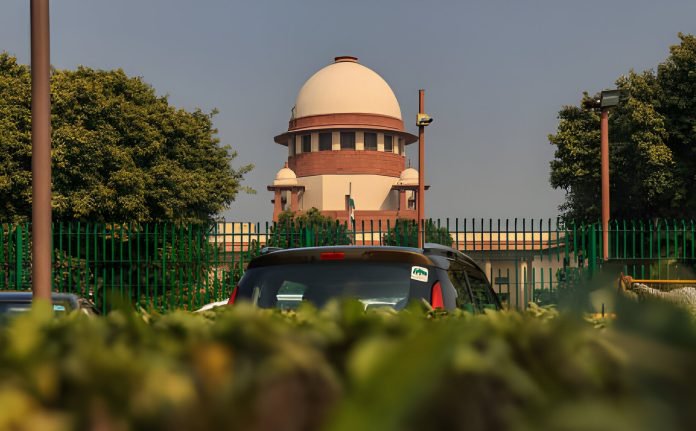
The Supreme Court of India, on Wednesday, referred the significant issue of whether litigants can directly approach high courts for anticipatory bail to a three-judge bench. The decision comes amid concerns over existing practices in various states, particularly Kerala.
Justices Vikram Nath and Sandeep Mehta convened among a bench and emphasized the necessity of having a larger judicial perspective on the matter. “This matter requires to be heard by a three-judge bench,” the Supreme Court remarked.
In a previous development, the apex court appointed senior advocate Siddharth Luthra as amicus curiae to provide assistance regarding the nuances of the anticipatory bail process.
One focal point of the Supreme Court’s discussion lies in the frequent practice observed in the Kerala High Court. On September 8, the court raised alarm over the “regular practice” of entertaining anticipatory bail applications without litigants seeking permission from the sessions court first.
“One issue that is bothering us is that in the Kerala High Court, anticipatory bail applications are regularly entertained directly,” the justices noted, questioning the necessity of this procedure. This peculiar approach of the Kerala High Court raises significant questions regarding bail processes across India.
In the context of the legal framework, the Supreme Court pointed to provisions within the older Code of Criminal Procedure and the newly enacted Bharatiya Nagarik Suraksha Sanhita (BNSS), 2023. The court highlighted that a defined hierarchy generally dictates who can grant bail, specifically under Section 482 of BNSS, which discusses the process for granting bail to those fearing arrest.
“It doesn’t happen in any other state,” the bench pointed out, expressing concern over the unique practice in Kerala which they argued could mislead the legal process. The justices further questioned why the courts directly engage with anticipatory bail applications, suggesting it might hinder the development of factual records ordinarily established in sessions court proceedings.
The debate was ignited during hearings regarding two individuals who contested a Kerala High Court order that denied them anticipatory bail. The key concern here is the direct approach these petitioners took towards the high court without seeking relief from the sessions court beforehand.
Through this case, the Supreme Court’s observations indicate a crucial consideration: whether the option to approach the high court should remain at the discretion of the accused, or if it should be mandatory for them to first seek remedy from the sessions court.
Additionally, the Supreme Court has directed that a notice be issued to the Kerala High Court, through its Registrar General, demanding a response concerning these concerns about anticipatory bail applications.
This ruling and the anticipated discussions at the three-judge bench could shape future bail procedures in India, ensuring justice while maintaining legal integrity. As the legal landscape evolves, the Supreme Court’s engagement with this matter will undoubtedly attract scrutiny and may redefine anticipatory bail norms in the country.