



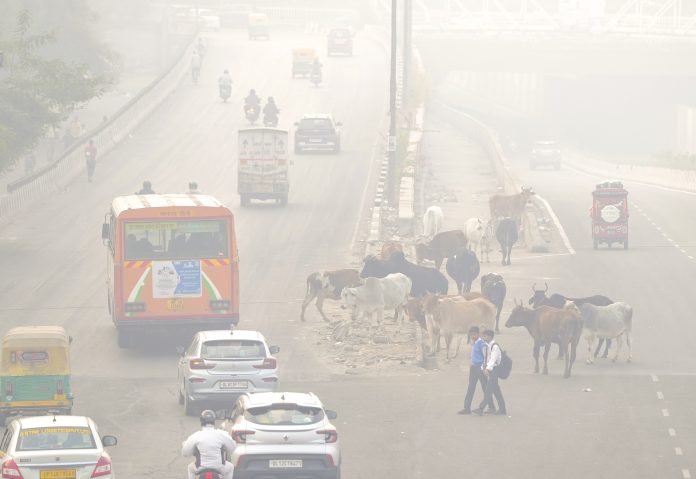
Delhi continues to suffer under hazardous air quality conditions, with an overall Air Quality Index (AQI) recorded at 360 on Saturday morning, according to the Central Pollution Control Board (CPCB). Residents of the national capital grapple with ‘very poor’ air pollution levels, significantly affecting health and daily activities.
According to the CPCB standards, the AQI scale categorizes air quality, where 0–50 is classified as good, 51–100 as satisfactory, 101–200 as moderate, 201–300 as poor, 301–400 as very poor, and anything above 401 as severe. The current index poses serious health risks, particularly for vulnerable groups, including children and the elderly.
Compounding the situation, Delhi recorded a minimum temperature of 11.8°C as reported by the India Meteorological Department (IMD). The weather conditions include dense fog, which is expected to persist throughout the day and negatively impact visibility.
A maximum temperature of around 28.2°C is on the horizon, but residents will experience moisture-laden air, with relative humidity recorded at 100 percent at 8:30 a.m. These humid conditions typically exacerbate pollution and hinder air circulation, worsening the overall air quality.
Health experts urge residents to consider limiting outdoor activities, especially during peak pollution hours. The hazardous air can lead to respiratory issues and other health complications.
Residents are advised to wear masks and use air purifiers at home. Government officials are expected to review measures to tackle rising pollution levels, which continue to plague the city.
This alarming trend in air quality has raised concerns among environmentalists and health advocates, who are calling for urgent action to curb emissions from vehicles and industrial sources contributing to Delhi’s infamous smog.