



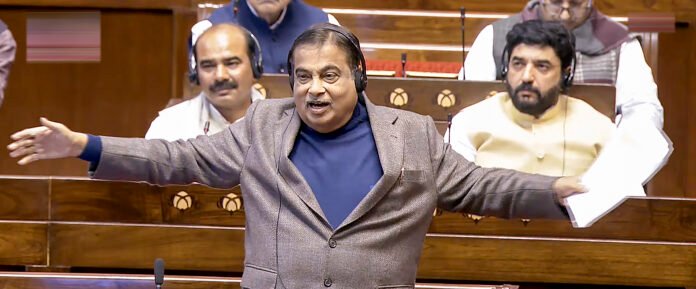
Union Minister for Road Transport and Highways Nitin Gadkari announced on Wednesday that the Multi-Lane Free Flow (MLFF) toll system and AI-based highway management will be implemented nationwide by the end of 2026. This initiative aims to eliminate waiting times at toll plazas for millions of commuters.
During the Question Hour in Rajya Sabha, Gadkari explained that these advancements in tolling would leverage artificial intelligence, satellite technology, and number plate recognition. This arrangement ensures seamless vehicle movement without the need to stop at toll booths.
“With MLFF, vehicles will cross toll points at speeds of up to 80 km per hour, minimizing delays significantly,” Gadkari remarked. He noted that the new system is set to replace the existing FASTag mechanism, which itself had reduced waiting times at tolls.
Prior to the introduction of FASTag, toll payments often took between three to ten minutes. After implementing FASTag, this duration came down to less than one minute. “FASTag increased our revenue by at least ₹5,000 crore. The MLFF system will be an even better facility, and our goal is to reduce waiting time to zero minutes,” he asserted.
The Minister elaborated that the MLFF system will not only provide convenience but will also have significant financial implications. It is expected to save fuel costs worth ₹1,500 crore and generate an additional revenue of ₹6,000 crore for the government. Furthermore, it aims to completely eliminate toll theft.
“By 2026, our aim is to have this system operational at 100 per cent efficacy. Once implemented, toll theft will cease, transparency will improve, and commuters will no longer face delays at toll plazas,” Gadkari reassured the members.
The introduction of this advanced system is a major stride towards modernising India’s highway infrastructure and enhancing the travel experience for millions of road users throughout the nation. The AI-enabled technology will help in reducing travel time and improving the overall efficiency of the roads.
While emphasizing the central government’s role, Gadkari clarified that it is responsible solely for national highways, not state or urban roads. He pointed out that the public often misattributes issues related to state and city roads to national highways through social media.
“We are committed to ensuring a transparent, efficient, and corruption-free system,” he added, signaling the government’s focus on improved highway management.
These developments mark a significant shift towards digital transformation in road management, echoing the government’s broader vision for smart infrastructure. The MLFF toll system is poised to redefine how toll payments are processed in India, enhancing convenience for drivers while also boosting government revenues.