



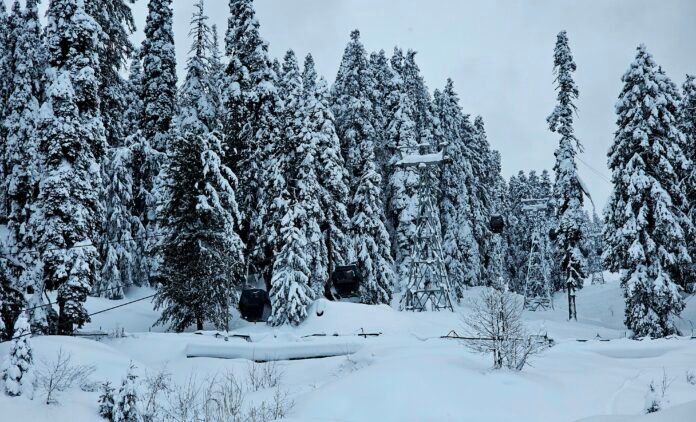
As the 40-day period of intense winter known as Chillai Kalan concludes, the Kashmir Valley witnesses an increase in night temperatures, marking a significant shift in weather patterns. This change, reported by officials on Friday, comes as residents breathe a sigh of relief from the severe cold conditions usually experienced during this phase.
The Meteorological Department’s latest updates indicate several areas have recorded minimum temperatures above freezing. Srinagar, for instance, saw its night temperature rise to 1.3 degrees Celsius, a welcome increase from the previous night’s low of minus 0.6 degrees. This rise is also 2.2 degrees above the seasonal average, indicating a notable warming trend.
Additional areas reporting above-freezing temperatures include Konibal at 1.0 degrees Celsius, Pulwama at 0.1 degrees Celsius, and Kulgam at 1.1 degrees Celsius. Most weather stations across the Valley confirm a similar upward trend in minimum temperatures.
However, frigid conditions still affect higher altitude regions. Sonamarg in Ganderbal district holds the title of the coldest place in Jammu and Kashmir with a recorded temperature of minus 10.6 degrees Celsius, a slight improvement from the previous night’s minus 11.2 degrees. Other cold spots include the ski resort of Gulmarg at minus 9 degrees and Pahalgam in south Kashmir at minus 5.3 degrees Celsius.
Among other monitored stations, Qazigund registered a low of minus 0.3 degrees Celsius, Kokernag posted minus 0.6 degrees, and Kupwara logged minus 3.1 degrees Celsius. Despite the rise in temperatures across most of the valley, these regions continue to face the brunt of winter’s wrath.
The period of Chillai Kalan, commencing on December 21, is traditionally recognized as the coldest phase of winter in Kashmir, characterized by frequent snowfall, particularly in mountainous areas. With the conclusion of this 40-day phase, the Valley transitions into Chillai Khurd, a 20-day period of what is often referred to as the small cold, which will be succeeded by the 10-day Chillai Bachha, known as the baby cold.
Looking ahead, the Meteorological Department forecasts a potential shift in weather. A fresh western disturbance may affect the region starting Sunday, which could lead to yet another bout of wet weather. Such disturbances not only contribute to the temperate changes in the Valley but also hold the potential for renewed snowfall in the coming weeks.