



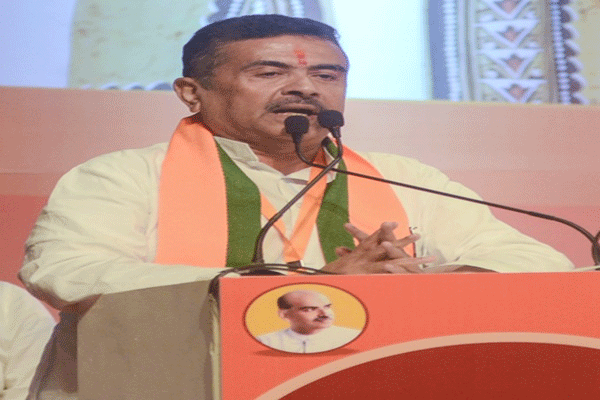
West Bengal’s chief minister-elect Suvendu Adhikari heralded a new chapter for the state on Saturday, declaring the end of misrule and the beginning of a ‘double-engine’ administration. This historic transition marks the start of what he termed the ‘Sonar Bangla’ phase, a promise of peace and prosperity as the Bharatiya Janata Party (BJP) prepares to govern for the first time since India’s independence.
As Prime Minister Narendra Modi arrived in Kolkata for the highly anticipated oath-taking ceremony at the Brigade Parade Ground, Adhikari welcomed him via a message on X. He characterized the event as a turning point, fulfilling the aspirations of the state’s founding fathers and signaling a bright future.
“A historic dawn for West Bengal indeed. It is a moment of profound pride and jubilation to welcome visionary leader PM Narendra Modi Ji to the City of Joy. Today, as we witness the swearing-in ceremony of the first-ever BJP government in West Bengal since Independence, we fulfil the dreams of our founding fathers,” Adhikari stated.
Adhikari’s words reflect a significant shift in the political landscape of West Bengal, which has been dominated by the Trinamool Congress (TMC) for over a decade. His administration promises to prioritize development, security, and governance that harmonizes with the central government led by the BJP.
Experts suggest the arrival of a double-engine government is crucial for West Bengal. They believe it will integrate state policies with national objectives, aiming to enhance infrastructure, boost investment, and generate employment opportunities. Adhikari reiterated these goals, emphasizing the importance of joint governance to achieve holistic growth.
In the lead-up to the swearing-in ceremony, excitement filled the air in Kolkata. Supporters gathered to witness this momentous occasion, many wearing BJP insignia and chanting slogans of support. The event symbolizes the culmination of a long electoral battle, where the BJP emerged victorious with a clear mandate from the people.
Political analysts view Adhikari’s leadership as essential to navigating the various challenges facing West Bengal. The state, which has a complex socio-economic fabric, requires a tailored approach to development, prioritizing both urban and rural needs. Adhikari aims to engage with all community stakeholders to facilitate inclusive growth.
With the BJP’s presence in West Bengal, there is a growing expectation for significant reforms, especially in education, healthcare, and employment generation. Adhikari’s administration is likely to focus on these issues as they strive to transform the narrative of the state, often overshadowed by political strife and economic challenges.
As we move forward, the aspirations of the citizens of West Bengal rest on the shoulders of this new government. They cherish hopes for improved governance, economic upliftment, and a peaceful environment conducive to growth. Only time will tell if Suvendu Adhikari can effectively turn these aspirations into reality.